

Gala Bingo casino Plinko
Introduction
When I look at Gala Gala Bingo Casino bingo guide casino Plinko, I do not see just another quick-play gambling product added to a lobby for variety. I see a format that strips casino play down to something unusually direct: you choose a stake, set a risk level, drop a ball, and watch pure probability unfold in front of you. That simplicity is exactly why Plinko gets attention. It is easy to understand in seconds, but the actual playing experience can feel very different depending on how the settings are configured.
On the surface, Plinko looks almost playful. A ball falls through a field of pegs and lands in one of several payout slots. In practice, though, the experience is more analytical than many first-time players expect. At Gala bingo casino, the appeal of Plinko is not built on a complicated bonus structure or a long feature cycle. It comes from tension, pace, and the constant contrast between small routine returns and the occasional high multiplier that can change the shape of a session.
That is why this page matters. Anyone can understand how Plinko looks. What players actually need is a clear explanation of what the format means in real use: how the ball path relates to outcome distribution, why risk level changes the feel of the session, where the pressure points are, and whether this style of play genuinely suits their habits. In this review, I will stay tightly focused on the game itself and explain what Plinko at Gala bingo casino really offers, where it performs well, and where caution is necessary.
What Plinko is and why it stands out in a casino lobby
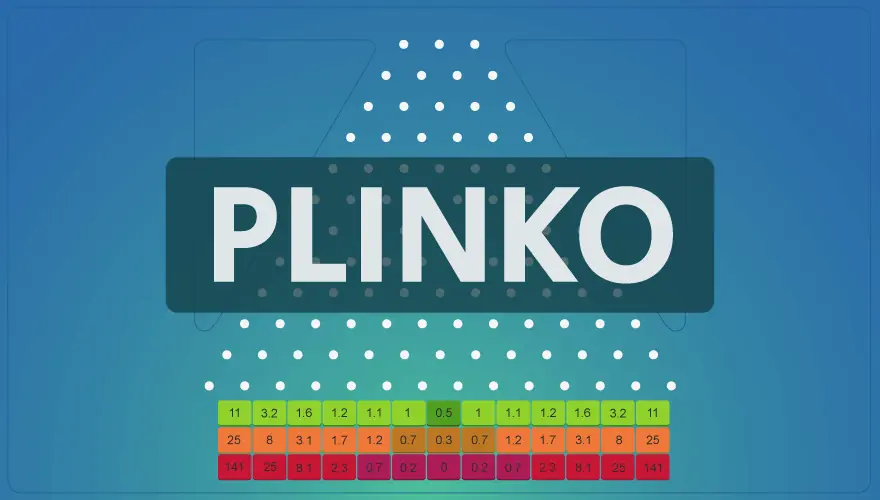
Plinko is a chance-based game built around a vertical board filled with pegs. Each round begins when the player releases a ball from the top. As it falls, the ball bounces left and right in a sequence of random deflections until it lands in a payout slot at the bottom. Each slot corresponds to a multiplier, and that multiplier is applied to the chosen stake.
What makes Plinko stand out is not visual complexity. In fact, it is the opposite. The board is clean, the logic is visible, and the result is delivered almost immediately. Many casino products ask the player to process symbols, paylines, bonus rules, side bets, or multiple stages of resolution. Plinko removes most of that. It gives the player a transparent event: one ball, one descent, one result.
That directness has made the format highly noticeable across modern online gambling platforms, including Gala bingo casino. It fits players who want fast decision cycles and clear cause-and-effect between settings and outcome patterns. The game also benefits from being visually intuitive. Even without reading a help file, most people understand what they are watching within moments.
There is another reason Plinko gets attention: it creates suspense without needing a long setup. A slot often builds anticipation through reels, near-misses, or feature triggers. Plinko does it through trajectory. The ball visibly threatens to drift toward a high multiplier, then changes direction at the last peg. That tiny movement can feel more dramatic than a far more elaborate animation. One of the most interesting things about Plinko is that a game with almost no narrative can still create strong emotional swings simply through motion and expectation.
How the Plinko mechanics actually work
To understand Gala bingo casino Plinko, it helps to separate the visible action from the underlying logic. Visually, the ball appears to bounce through a chaotic path. Mathematically, the game is built around probability distribution. The central slots are usually easier to reach and therefore tend to carry lower multipliers. The outer slots are harder to hit and usually offer much larger returns. That structure is not decorative; it is the core of the entire format.
Most versions of Plinko let the player adjust at least three variables: stake size, number of rows, and risk level. Not every version presents these settings in exactly the same way, but the principle remains consistent. More rows generally mean a longer path and a wider spread of possible landing positions. Risk level changes how the multipliers are distributed across the bottom slots. Lower-risk settings typically compress the payout map, while higher-risk settings make the extremes more pronounced.
Here is the practical logic behind the movement:
The player selects a stake and any available board settings.
The ball is released from the top of the board.
Each peg contact shifts the path left or right according to the game’s random outcome generation.
The final landing slot determines the multiplier.
The stake is multiplied by that value, producing the round result.
The important point is this: the ball’s journey looks physical, but the real experience is statistical. Players often feel they are “watching” randomness happen, and that visual layer is part of the attraction. But for practical decision-making, what matters is the payout structure beneath the animation. If the board is set to high risk, the player is effectively choosing a session with more empty-feeling stretches and a stronger dependence on rare top-end hits. If the board is set lower, the session is usually steadier but less explosive.
| Core element | What it changes | What it means in practice |
|---|---|---|
| Stake | Base amount per drop | Directly affects bankroll pressure and the value of all results |
| Rows | Length and spread of the ball path | Can widen the result range and alter the feel of each drop |
| Risk level | Multiplier distribution | Changes whether the session feels steadier or more dependent on rare outcomes |
| Auto-play or repeated drops | Session speed | Can increase volume quickly and reduce emotional control if used carelessly |
One observation I think matters here: Plinko often gives players a false sense of transparency. Because you can see the ball move, the round feels more readable than a hidden RNG process. But from a decision-making standpoint, the game is not more controllable than other chance-based formats. The interface is honest about the event, yet it can still tempt players into overestimating patterns that are not really there.
Why the game feels engaging and how the session tempo develops
The tempo of Plinko is one of its strongest design features. A round resolves quickly, but not instantly. That small delay matters. It gives the brain time to anticipate the result without forcing the player through a long animation cycle. In many slot sessions, players either wait through repetitive reel spins or chase a bonus that may not arrive for dozens of rounds. Plinko compresses the suspense into a shorter, cleaner loop.
At Gala bingo casino, this makes Plinko particularly suitable for players who prefer immediate feedback. You place a stake, watch a brief descent, see the multiplier, and decide whether to continue or adjust settings. The rhythm is compact and easy to follow. That is good for clarity, but it also means bankroll movement can accelerate quickly.
The game’s engagement comes from three overlapping factors:
Visible uncertainty. The path looks unstable until the last moments, which keeps attention high.
Fast resolution. Results arrive quickly enough to support repeated play without long dead time.
Configurable tension. Risk settings let the same basic board feel calm, uneven, or highly aggressive.
In real sessions, this means Plinko can swing between two very different moods. On lower-risk settings, it can feel almost methodical, with frequent modest returns that soften the session flow. On higher-risk settings, it becomes sharper and more psychologically demanding. You may see many low-value landings while waiting for a result that justifies the variance.
A memorable thing about Plinko is that it can feel relaxing and stressful within the same ten-minute session. The board looks simple, the controls are light, and the rounds are clean. Yet the emotional pressure can rise quickly if the player increases risk and starts expecting a rare multiplier to “arrive soon.” That expectation is exactly where many sessions become less disciplined.
How risky Plinko really is and who may enjoy it most
Plinko is not risky in one fixed way. Its risk profile depends heavily on configuration. That is one of the most important things a player should understand before launching it. Some casino products have a more stable identity: a slow slot, a volatile slot, a low-edge table game. Plinko is more flexible. The same board can feel moderately controlled or highly uneven depending on settings.
At lower risk, Plinko tends to produce a denser cluster of modest outcomes. That does not mean the player is safe from losses, but the session usually feels less brutal. At higher risk, the distribution stretches outward. The most attractive multipliers become available, but they are reached less often, and the cost of chasing them is usually long sequences of ordinary or poor returns.
This makes the game suitable for certain player types more than others. I would say Plinko fits best if you:
prefer short rounds and immediate result feedback;
like probability-driven formats more than symbol-based entertainment;
are comfortable adjusting stake and risk settings deliberately;
can treat rare high multipliers as occasional events rather than expectations.
It may be less suitable if you:
want long-form bonus rounds or layered slot features;
dislike sessions where many rounds can feel similar;
tend to raise stakes quickly after dry spells;
prefer Gala Bingo Casino games help where strategy has a stronger role in decision-making.
That last point is worth stressing. Plinko can look interactive because you choose settings, but once the drop begins, the player has no influence over the result. The meaningful decisions happen before the round, not during it. For some players, that is ideal. For others, it may feel too passive after the novelty wears off.
What players should understand about probabilities and possible outcomes
Probability in Plinko is easier to visualize than in many other casino products, but it is still often misunderstood. The board shape encourages a central tendency. In simple terms, the ball is more likely to land somewhere near the middle than at the edges. Since the middle usually carries smaller multipliers, many rounds are designed to resolve into limited returns. The large values exist, but they sit at the low-probability extremes.
This has two practical consequences. First, players should not interpret a series of central landings as the game “withholding” higher values. That pattern is often exactly what the distribution predicts. Second, the presence of a very large top multiplier does not mean the session is likely to reach it within a short sample.
I find that Plinko creates a specific kind of illusion: because every drop is visible, players sometimes feel the board is “close” to a big result when the ball drifts near an edge. In reality, near-movement has no carryover value. A ball that almost hits a premium slot is still just a completed losing or modest round. This sounds obvious, but during fast sessions it matters a lot. Visual proximity can encourage emotional chasing.
| Session setting | Typical feel | Main trade-off |
|---|---|---|
| Low risk | More stable, more routine returns | Lower chance of standout multipliers |
| Medium risk | Balanced but still uneven | Can create mixed sessions with no clear rhythm |
| High risk | Sharper swings, stronger anticipation | Greater dependence on rare outcomes |
Another practical point: session volume matters. Because rounds resolve quickly, players can reach a large number of drops in a short period, especially if auto-play is available. Even when individual stakes look small, cumulative exposure can rise faster than expected. In that sense, Plinko is not only about multiplier distribution; it is also about how quickly the player cycles through decisions and bankroll.
How Plinko differs from slots and other casino game formats
The easiest comparison is with classic online slots, because many players arrive at Plinko from reel-based products. The difference is immediate. Slots are built around symbol combinations, reel outcomes, feature triggers, and often a longer reward curve. Plinko is built around a single event with a direct multiplier result. There are no paylines to track, no wild substitutions to interpret, and no bonus round to wait for.
That difference changes the entire playing experience. A slot can create entertainment through theme, audiovisual design, and layered anticipation. Plinko is much more stripped down. Its appeal is mechanical rather than cinematic. Some players find that refreshing. Others miss the sense of progression that slots often provide.
Compared with Gala Bingo Casino roulette page, Plinko also occupies a distinct space. It is simpler than blackjack, less decision-driven than poker variants, and less ritualised than roulette. Roulette may be the closest emotional comparison because both can produce quick results and rely strongly on probability distribution. But Plinko is more visual in its resolution and more adjustable through risk settings.
Here is the practical distinction I would make:
Versus slots: Plinko is cleaner, faster to read, and usually less dependent on theme and bonus architecture.
Versus roulette: Plinko adds visible motion and configurable payout mapping.
Versus crash-style products: Plinko feels less timing-based and more distribution-based.
Versus card games: Plinko offers far less strategic input once the round starts.
At Galabingo casino, that means Plinko fills a very specific role in the lobby. It is not a replacement for slots, and it is not trying to be. It is better understood as a compact probability game for players who want immediate, repeatable rounds with minimal rule friction.
Where Plinko performs well and where its limits show
The strongest side of Plinko is clarity. Few casino products explain themselves so quickly. Within a minute, a player can understand the board, place a stake, and know what kind of result is possible. That low barrier to entry is a real advantage, especially for users who do not want to study a large paytable or bonus guide.
Its second major strength is pacing. The game wastes very little time. This makes it efficient for players who want short sessions or who prefer a format where every round resolves without filler. The third strength is adaptability. Risk settings can change the tone of play enough to make the same board feel meaningfully different.
But there are limitations. The first is repetition. Because every round follows the same basic structure, some players will feel the pattern become monotonous more quickly than in feature-rich slots. The second is psychological pressure at high risk. The game can encourage the idea that a rare multiplier is always just one drop away, even though each round remains independent. The third is that visual simplicity can hide bankroll intensity. A session that feels light can still move through many bets in a short time.
I would summarise the practical pros and cons like this:
Strong points: easy to understand, fast rounds, adjustable risk profile, clear result logic, low rule complexity.
Weaker points: limited variety within the core loop, little strategic depth during the round, high-speed bankroll drain if played carelessly, strong temptation to chase rare outcomes.
One detail that often gets overlooked is how much the board’s simplicity changes responsibility. In a complicated slot, players sometimes blame confusion or hidden structure for poor decision-making. In Plinko, the choices are more exposed. Stake, risk level, and pace are largely in front of the player. That makes the format cleaner, but it also means discipline matters more than many people assume.
What to check before starting a session on Gala bingo casino Plinko
Before playing Gala bingo casino Plinko, I would focus on a few practical checks rather than diving in based on the visual appeal alone. The game is simple enough to launch instantly, but that is exactly why preparation matters.
Check the risk setting first. Do not treat this as a cosmetic option. It changes the session profile in a meaningful way.
Set a stake that matches the speed of play. A small stake can still add up quickly over many drops.
Look at the payout map. Understand where the large multipliers sit and how unlikely those edge outcomes usually are.
Use demo mode if available. It helps you feel the rhythm before real money is involved.
Decide your session length in advance. Plinko is easier to overplay than slower formats.
If I were advising a new player, I would also suggest starting on a lower or medium setting just to understand the flow. High-risk Plinko can be exciting, but it gives a distorted first impression if someone has not yet seen how often the board settles into ordinary outcomes. A calmer setup reveals the structure more honestly.
Another useful check is emotional expectation. If a player enters Plinko wanting a dramatic feature sequence, it may disappoint. If they want a fast, probability-led format with visible suspense and minimal clutter, it may fit very well. The right expectation makes a big difference to whether the game feels sharp or empty.
Final verdict
Gala bingo casino Plinko offers a very specific kind of gambling experience: fast, visual, probability-driven, and far more dependent on settings than its simple appearance suggests. What it really gives the player is not depth in the traditional slot sense, but clarity and tempo. You can understand the board quickly, adjust the session profile through risk level, and get immediate feedback from every drop.
Its key strengths are easy to define. The format is accessible, the action is clear, and the suspense arrives without unnecessary complication. Plinko also does a good job of making probability feel visible, which is one reason it has become so noticeable across online casino platforms, including Gala bingo casino. For players who like short rounds and direct outcomes, that is a genuine advantage.
The caution points are just as important. The game can become repetitive, high-risk settings can create long dry stretches, and the speed of play can push bankroll turnover faster than expected. The board may look simple, but the session can become intense very quickly if the player starts chasing rare multipliers or increasing stakes without a plan.
So, is Plinko worth trying? In my view, yes, if you want a stripped-back format where the tension comes from distribution and timing rather than features and themes. It suits players who appreciate quick decisions, visible randomness, and a clean interface. It is less suitable for those who want richer progression, strategic involvement, or a more varied entertainment loop. In short, Plinko at Gala bingo casino is not compelling because it is trendy. It is compelling because it turns a very simple setup into a surprisingly sharp test of expectation, patience, and control.
FAQ
How does Plinko work with ball drops and multipliers?
A ball is released from the top and bounces through pegs before landing in a result slot. Each slot is linked to a multiplier that determines the win for that round.
What does the risk level mean in Plinko sessions?
The risk level is tied to how aggressive the multipliers are and how quickly outcomes can become high. It does not change the game mechanics, but it can affect the overall volatility of results.
Why can a chosen Plinko option look different between sessions or devices?
Different risk settings and game modes may display different multiplier ranges and slot layouts. Device size can also change how controls are arranged, but the ball-drop physics remain the same.
How does mobile play affect Plinko controls on a phone?
Mobile layouts adjust the height and spacing of the game controls to keep the ball-drop button easy to tap. Zoom and landscape mode can improve visibility, especially when reading the multiplier panel.
What is the most common beginner mistake when playing Plinko for the first time?
Choosing the wrong mode or risk setting too quickly before testing the controls. Another frequent issue is misunderstanding that each round is independent, so results from previous drops do not influence the next ball.